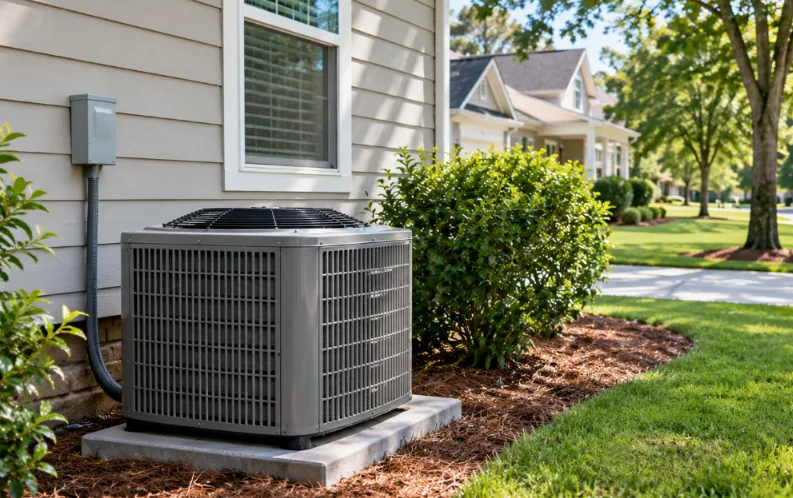

The AC quits on a brutal midsummer afternoon, and the first argument is never about the unit itself. It is about whose job it was to keep it running and whose bill it is now. Get that wrong, and one party pays for a repair they never owed while the other sits in a house they cannot cool. This guide draws the line Georgia actually uses.
The question of landlord or tenant HVAC maintenance in Georgia usually resolves this way: landlords generally handle major HVAC repairs and must keep rental premises in repair. If a landlord provides air conditioning, Georgia landlord-tenant guidance says the landlord is responsible for repairing it. Routine tasks such as filter changes may be assigned to the tenant by the lease, which should be read alongside the landlord's legal repair obligations.
Who is responsible for HVAC maintenance in a Georgia rental?
In Georgia, the landlord is generally responsible for major HVAC repairs and equipment failures. State law requires landlords to keep rental premises in repair. Georgia's landlord-tenant guidance also says that when a landlord provides air conditioning with the rental, the landlord is responsible for repairing it when it fails because of normal equipment problems.
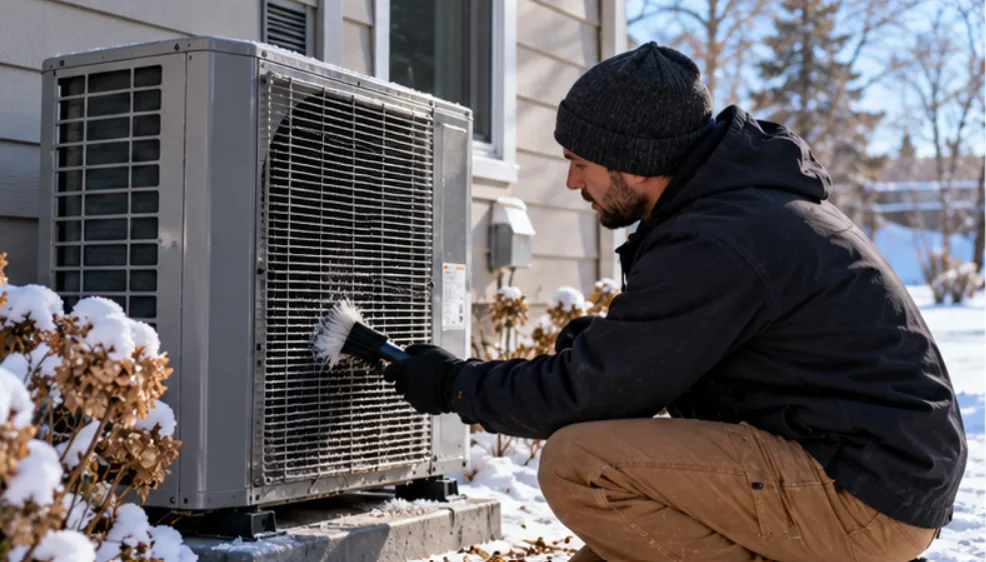
Routine HVAC tasks are often assigned to tenants by the lease. These may include changing air filters as required, keeping supply and return vents unobstructed, and avoiding debris buildup around the outdoor condenser. These simple tasks help the HVAC system operate properly and reduce problems caused by neglect.
The lease agreement also determines who handles specific routine maintenance tasks. For example, a lease may require tenants to replace air filters regularly or notify the landlord when the system needs servicing. Those provisions should be read alongside the landlord's legal repair obligations.
The important distinction is between routine maintenance and major HVAC repairs. Tenants may be responsible for everyday upkeep, but landlords generally handle equipment breakdowns, failed components, and repairs needed to restore heating or cooling. Always review the lease and document maintenance requests before deciding who should pay for an HVAC service call.
What HVAC tasks are usually the tenant's responsibility?
Routine tasks commonly assigned to tenants are simple upkeep items that help the system operate properly. A filter that loads with dust chokes airflow, strains the blower, and can freeze the coil. Keeping air moving is the single most useful thing a renter does.
Here is the upkeep that commonly lands on the tenant:
- Change the air filter: Replace it every 1 to 3 months, more often with pets or allergies.
- Keep vents clear: Leave supply and return registers unblocked by furniture or rugs.
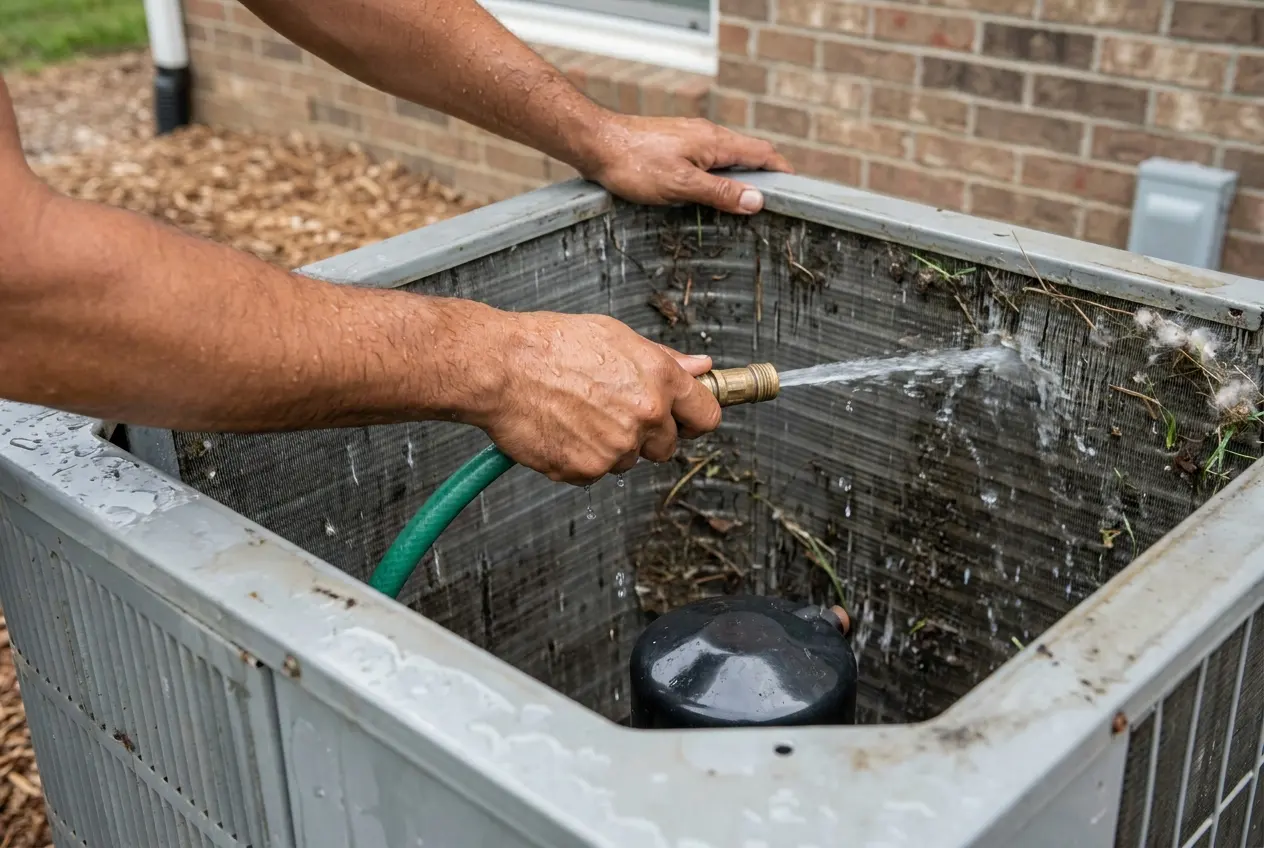
- Clear the outdoor unit: Pull leaves, grass clippings, and debris back from the condenser.
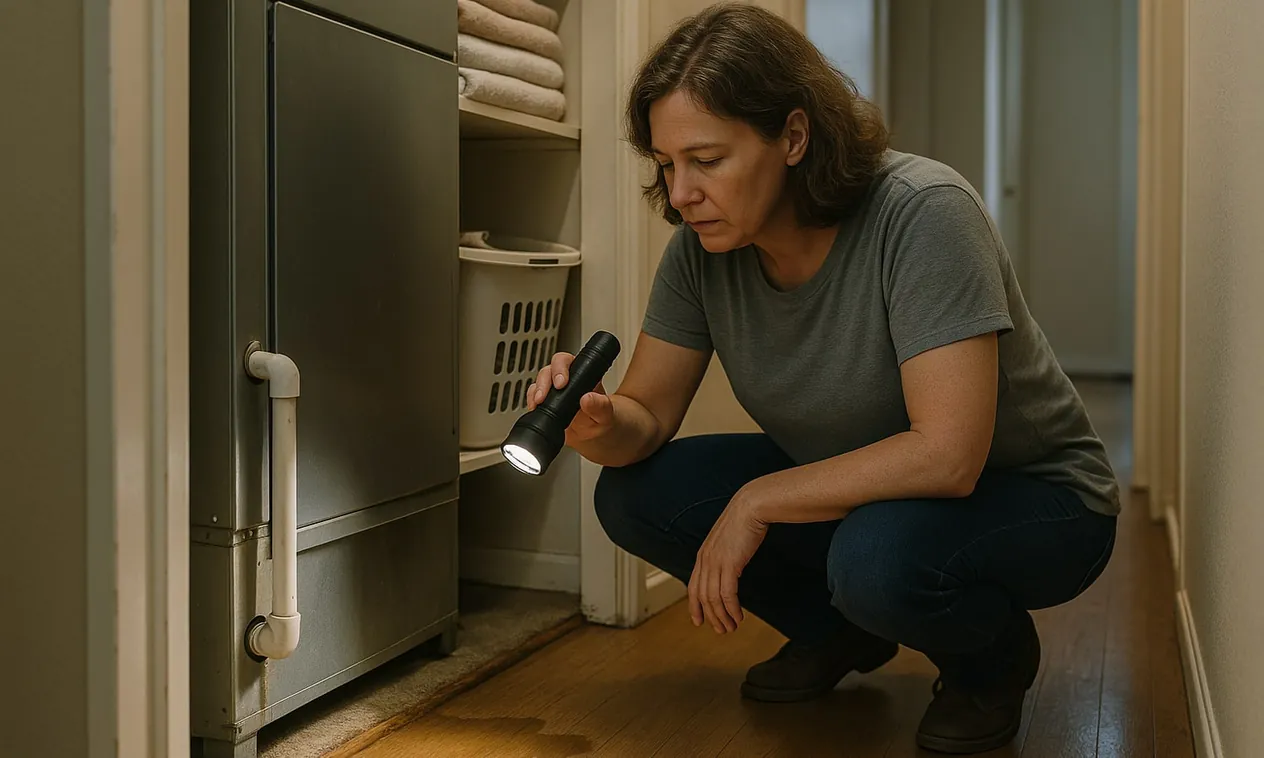
- Watch the condensate drain: Report a clogged drain line early, since a backed-up drain overflows.
- Report problems promptly: Tell the landlord the moment something sounds, smells, or runs wrong.
The condensate drain deserves a word, because the humidity here makes it matter more than in a dry climate. Your AC pulls moisture from the air, and that water leaves through a drain line. In a muggy summer that line can clog with algae and overflow.
Spotting such a clog early and reporting it promptly can help prevent water damage. Professional HVAC maintenance is usually handled according to the lease or the property owner's maintenance policy.
Where routine upkeep ends and a real repair begins
Most disputes live in the gray zone, where an upkeep task and a real repair look alike at first glance. These paired examples show how to tell them apart.
A clogged filter versus a failing blower
Weak airflow from the vents can come from a heavily clogged filter, which may be a tenant-assigned maintenance task under the lease. It can also come from an equipment or ductwork problem. If airflow stays weak after the filter is changed, report the problem so the system can be professionally diagnosed.
A tripped breaker versus a dead compressor
A system that will not start may have a tripped breaker, which can be checked once. If it trips again, stop resetting it and report the problem. Repeated trips can indicate an electrical or equipment fault that needs professional diagnosis.
A comfort complaint versus an equipment fault
Hot and cold spots between rooms do not always mean the HVAC equipment has failed. In older Atlanta homes, uneven temperatures can trace to ductwork, insulation, system sizing, or equipment performance. Whether the landlord needs to correct the problem depends on its cause, the lease, and whether the system is functioning as required.
Normal wear versus tenant-caused damage
Much of the city's older rental stock runs aging equipment and original ducts, so parts wear out on their own schedule. Normal wear is generally the landlord's responsibility. A severely neglected filter can restrict airflow, contribute to coil icing, and potentially damage the system, but whether the tenant is responsible for resulting repair costs depends on the lease and evidence of what caused the failure.
What this means is that the lease and the maintenance record matter in close calls. Ordinary equipment failure is generally different from tenant-caused damage, so documentation helps show what happened and which responsibilities applied.
What happens when the AC breaks down in a Georgia rental?
If the landlord provided the central air conditioner, a mechanical failure generally falls within the landlord's repair responsibility. Georgia does not set one universal HVAC repair deadline; the reasonable time depends on the seriousness of the condition and the repair needed.
Whether the landlord repairs or replaces depends on the equipment. A central AC or heat pump commonly lasts 10 to 15 years, so a failure near that range may make replacement the honest call rather than another patch.
A proper diagnosis on most makes and models of air conditioners and heat pumps settles it, with a straight repair-versus-replace rundown, and a landlord weighing a failed heat pump repair in Atlanta wants that number before deciding.
| Situation | Who usually pays | Why |
|---|---|---|
| Compressor or coil failure from wear | Landlord generally | Normal equipment repairs are generally the landlord's responsibility when the system is provided with the rental |
| Failure traced to a neglected filter | Possibly tenant | Damage from tenant-assigned upkeep can shift the cost |
| Aging unit past 10 to 15 years | Landlord decides repair vs replace | Age shapes whether a patch is worth it |
| Total no-cool in midsummer | Landlord generally arranges repair if AC was provided | Timing depends on severity and circumstances |
What this means for a tenant is that a midsummer breakdown is the moment documentation pays off. The faster and cleaner your report, the harder it is to delay the fix.
How should a tenant report a broken AC to the landlord?
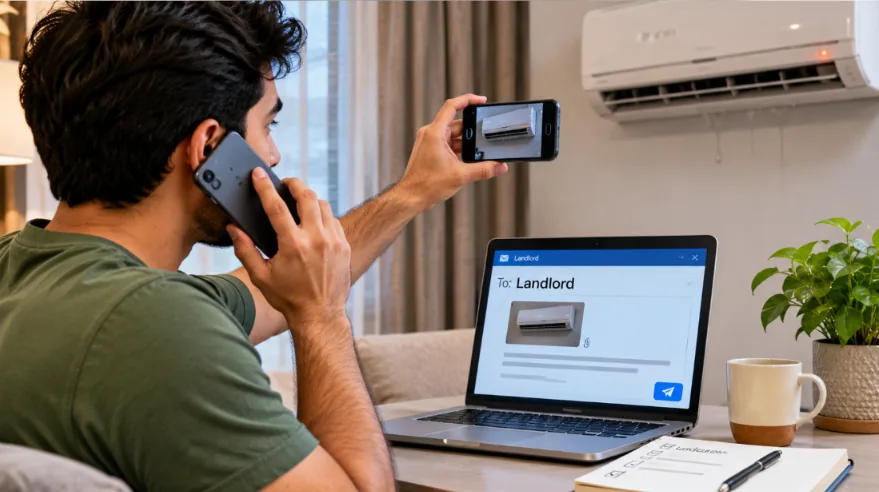
Report in writing, keep the record, and give reasonable time before you escalate. A phone call vanishes; a dated message does not. The tenant who can show the system was maintained and the fault reported promptly stands in a far stronger position than one relying on memory and a voicemail.
Here is how to report so it gets fixed and you stay protected:
- Put it in writing: Send a text or email with the date, the problem, and the time it started.
- Add photos: Capture the thermostat reading, any water, ice, or error codes.
- Keep your upkeep record: Note when you changed filters so neglect cannot be pinned on you.
- State the impact: Mention indoor temperatures and any vulnerable occupants in the home.
- Allow reasonable time, then escalate: If the landlord still does not act, consider local code enforcement where applicable, Georgia Legal Services, or a landlord-tenant attorney.
A clear paper trail makes it much easier to establish when the problem was reported and what maintenance was performed. Dates, photos, and a filter log create a useful record if responsibility later becomes disputed. Settling the routine maintenance schedule ahead of time prevents most of these calls in the first place.
Who pays for seasonal HVAC tune-ups in a Georgia rental?
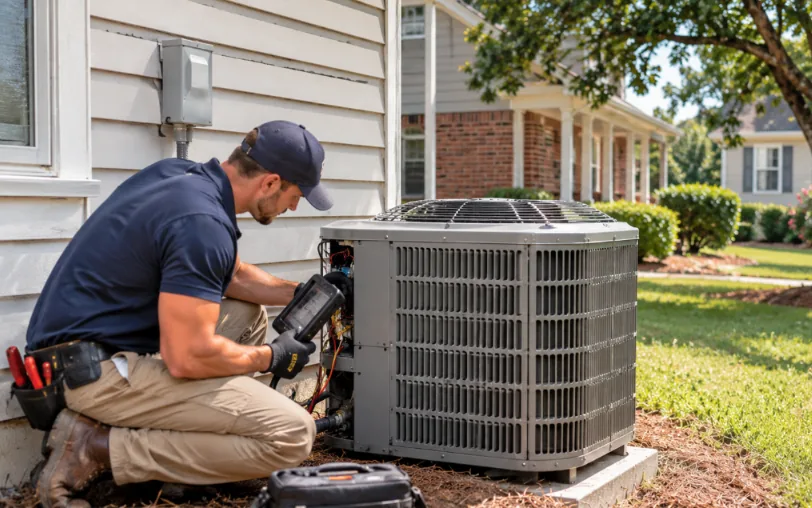
A seasonal HVAC tune-up is different from fixing a broken air conditioner. It is planned service intended to check the equipment before it faces months of heavy use. Georgia law does not assign seasonal HVAC tune-ups to one party in every rental. The lease or property-management policy should state who schedules and pays for preventive maintenance, and landlords often arrange it because they own the equipment and want a service record.
Before summer, a technician can inspect the outdoor condenser, check refrigerant system performance, clean accessible components as appropriate, and inspect the condensate drain. These checks matter in Georgia, where air conditioners often run for extended periods in hot, humid weather. A clogged drain or poorly performing system can become a much bigger problem when cooling demand is high.
The lease should make it clear who schedules routine service and who pays for it. If the tenant is responsible for arranging a visit, the landlord should clarify which HVAC company to use and whether approval is needed before booking. A landlord can also use an HVAC maintenance plan to organize scheduled visits and keep service records. The key is to agree on responsibility before the next cooling season, rather than waiting until the system stops working.
Why choose Indoor Experts Heating & Air Conditioning in Atlanta?
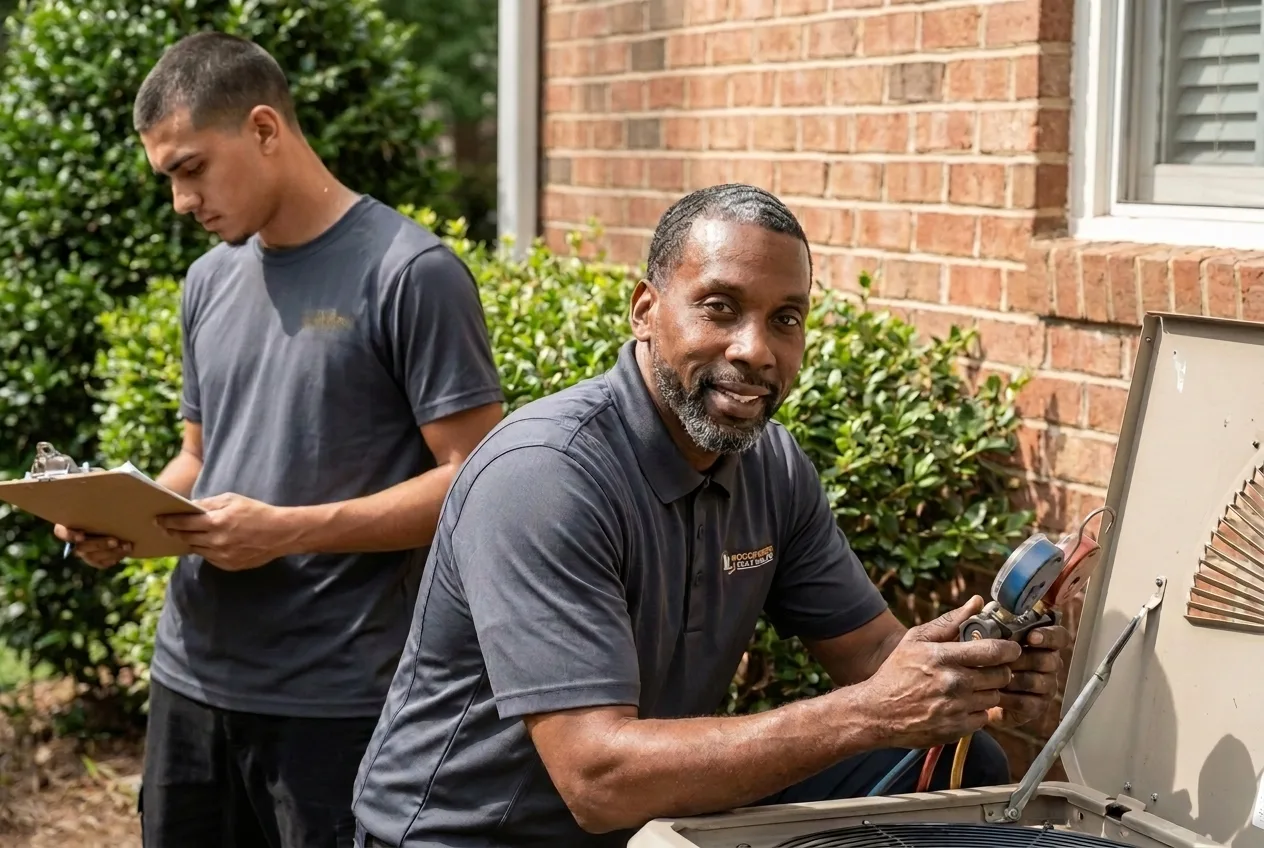
When an HVAC system stops cooling or heating a Georgia rental, landlords and tenants need to know what has actually failed before deciding who should handle the expense. At Indoor Experts Heating & Air Conditioning, we diagnose air conditioning and heating problems, explain the repair options, and provide a written price before work begins.
A neglected filter, clogged condensate drain, electrical problem, or failed compressor can cause very different symptoms and require different repairs. We can inspect the equipment and help identify the underlying issue. If the system needs seasonal attention rather than an emergency repair, our Comfort Club maintenance plan includes two scheduled visits each year, one before cooling season and one before heating season.
Whether you are a landlord arranging service for a rental property or a tenant reporting an HVAC problem, getting a clear diagnosis helps everyone understand the next step. Call Indoor Experts Heating & Air Conditioning at (404) 913-5802 to schedule an appointment. We serve Atlanta and Decatur, Monday through Friday, 8 AM to 6 PM, and Saturday, 10 AM to 4 PM.
Frequently asked questions
Can a tenant in Georgia withhold rent if the AC is broken?
Georgia does not provide a general right to withhold rent simply because the air conditioner stops working. Tenants should notify the landlord in writing, keep records of repair requests, and allow a reasonable opportunity for repairs. Georgia's repair-and-deduct remedy is different from simply stopping rent payments and has specific notice and documentation requirements, so get legal guidance before withholding rent or deducting repair costs.
Is the landlord required to fix the AC in Georgia summer heat?
Georgia does not generally require a landlord to provide air conditioning, but if the landlord provides it with the rental, Georgia's landlord-tenant guidance says the landlord is responsible for repairing it. The urgency depends on the circumstances, including the severity of the condition and the repair needed.
Who pays if the AC breaks because a filter was never changed?
Responsibility depends on the lease and the cause of the breakdown. If the tenant was required to replace filters and neglected that responsibility, the landlord may have grounds to seek reimbursement for resulting damage. However, ordinary equipment failure does not automatically make the tenant responsible for repair costs.
How long does a Georgia landlord have to fix a broken HVAC system?
Georgia law does not establish one specific repair deadline for every HVAC problem. Instead, repairs generally must be completed within a reasonable time after the landlord receives notice. A complete loss of heating or cooling during extreme weather may require more urgent attention than a minor performance issue.
Can a Georgia landlord make tenants responsible for HVAC maintenance?
A lease can generally assign routine tasks, such as changing air filters or keeping vents unobstructed, to tenants. However, assigning these responsibilities does not automatically transfer responsibility for major equipment failures or eliminate the landlord's legal repair obligations. Review the lease carefully to understand which maintenance duties apply.
How quickly should a landlord respond to a reported HVAC problem?
Georgia law requires landlords to make necessary repairs within a reasonable time, rather than specifying a universal number of days. A complete AC failure during extreme summer heat deserves prompt attention. Tenants should report the problem in writing and keep copies of communications and repair updates.