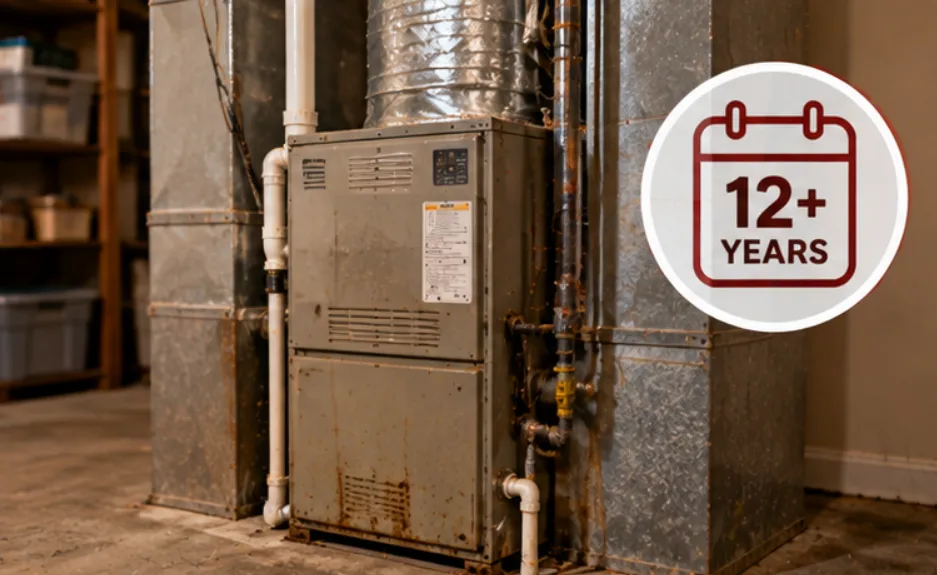
A furnace that is more than 12 years old may still heat your Atlanta home reliably, but it deserves closer attention than a newer system. As components age, the priorities shift from routine cleaning and efficiency checks to identifying wear, evaluating combustion safety, and deciding whether repairs remain worthwhile. A furnace does not automatically need replacement at 12 years, but its condition matters more with every additional heating season.
Atlanta's mild winters can make furnace problems easy to overlook. Your system may sit idle for weeks during warmer weather, then suddenly run for hours when temperatures drop. That first sustained heating cycle can expose a weak igniter, restricted airflow, failing blower motor, or combustion issue that went unnoticed during the previous season.
Understanding what changes after the 12-year mark helps you plan maintenance, recognize warning signs, and avoid unexpected breakdowns. The goal is to keep a dependable furnace operating safely while identifying when continued repairs no longer make financial sense.
Why does furnace maintenance change as a furnace ages?
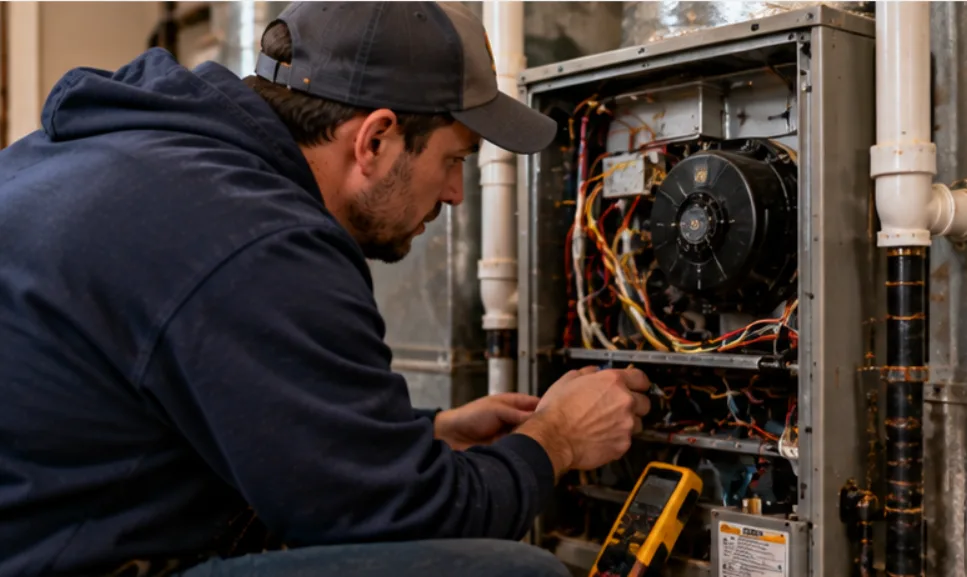
As a furnace moves beyond roughly 12 years of service, maintenance should focus more closely on component wear, reliable operation, and safety. Repeated heating cycles can affect metal parts, while motors, igniters, flame sensors, and electrical controls may become less dependable with age. Even if the furnace still heats your home, these changes make a detailed inspection increasingly important.
During maintenance, a technician should pay particular attention to:
- Heat exchanger condition: Check for signs of corrosion, cracks, or deterioration.
- Ignition components: Test the igniter and flame sensor for reliable operation.
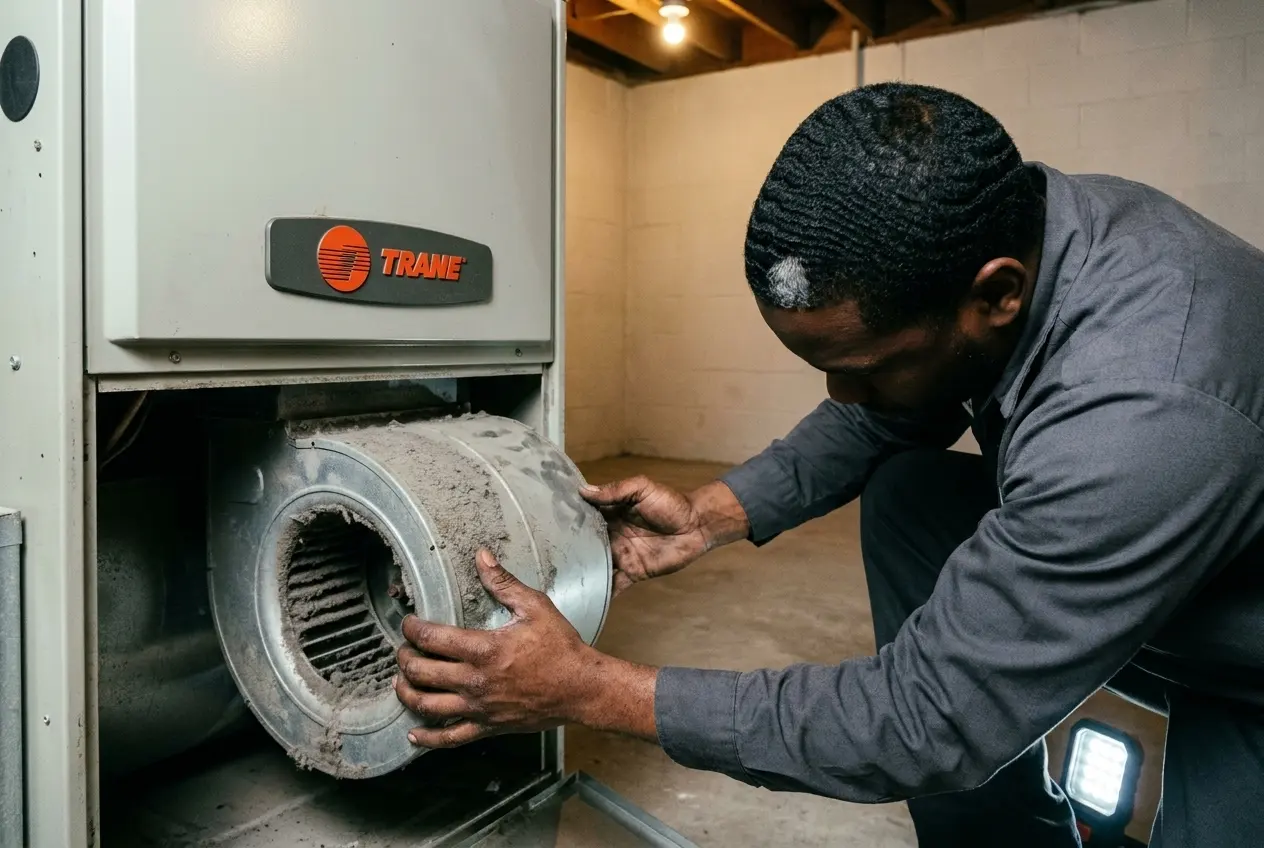
- Blower performance: Look for unusual noise, restricted airflow, or motor wear.
- Safety controls: Verify that the furnace starts, operates, and shuts down correctly.
Many gas furnaces provide roughly 15 to 20 years of service, although maintenance history, installation quality, usage, and overall condition can shorten or extend that range. In Atlanta, scheduling an inspection before the heating season helps identify developing problems before a cold snap puts the older system under sustained demand.
How often should you service a furnace that is over 12 years old?
Professional furnace maintenance is generally recommended once a year, preferably in the fall before the heating season. That annual inspection should include safety checks, cleaning where needed, airflow evaluation, and testing of important operating components. Older equipment benefits from the same basic schedule, with additional attention based on its condition and service history.
A second seasonal HVAC visit may be useful when the system has substantial wear, recurring performance problems, or shared components that serve both heating and cooling. For example, a combined furnace and air-conditioning system uses the same blower and ductwork throughout the year. A cooling-season inspection can identify airflow or drainage issues that may affect overall system performance, even though it does not replace a dedicated furnace safety inspection.
| Equipment condition | Maintenance approach | Main priority |
|---|---|---|
| Newer furnace in good condition | Annual professional service | Cleaning, efficiency, and routine checks |
| Furnace over 12 years old | Annual service with age-focused inspection | Wear, combustion safety, and reliability |
| Older furnace with recurring faults | Inspection and follow-up based on findings | Diagnose repeated failures and plan repairs |
| Furnace with suspected safety defect | Stop operation when advised and arrange prompt assessment | Resolve the hazard before further use |
The right schedule depends on manufacturer guidance, the furnace's condition, and any problems found during previous visits. Review the recommended tasks in a professional furnace maintenance service, and keep records of inspections, repairs, and replaced components.
What should a technician inspect on an older furnace?
An older furnace needs more than a quick filter change and a general visual check. The inspection should focus on the parts responsible for safe combustion, reliable ignition, proper airflow, and consistent operation. Findings should be documented clearly so homeowners can distinguish normal age-related wear from a defect that requires immediate attention.
Important inspection points include:
- Heat exchanger: Look for visible corrosion, cracks, or other signs of deterioration. Use appropriate inspection methods to assess suspected damage.
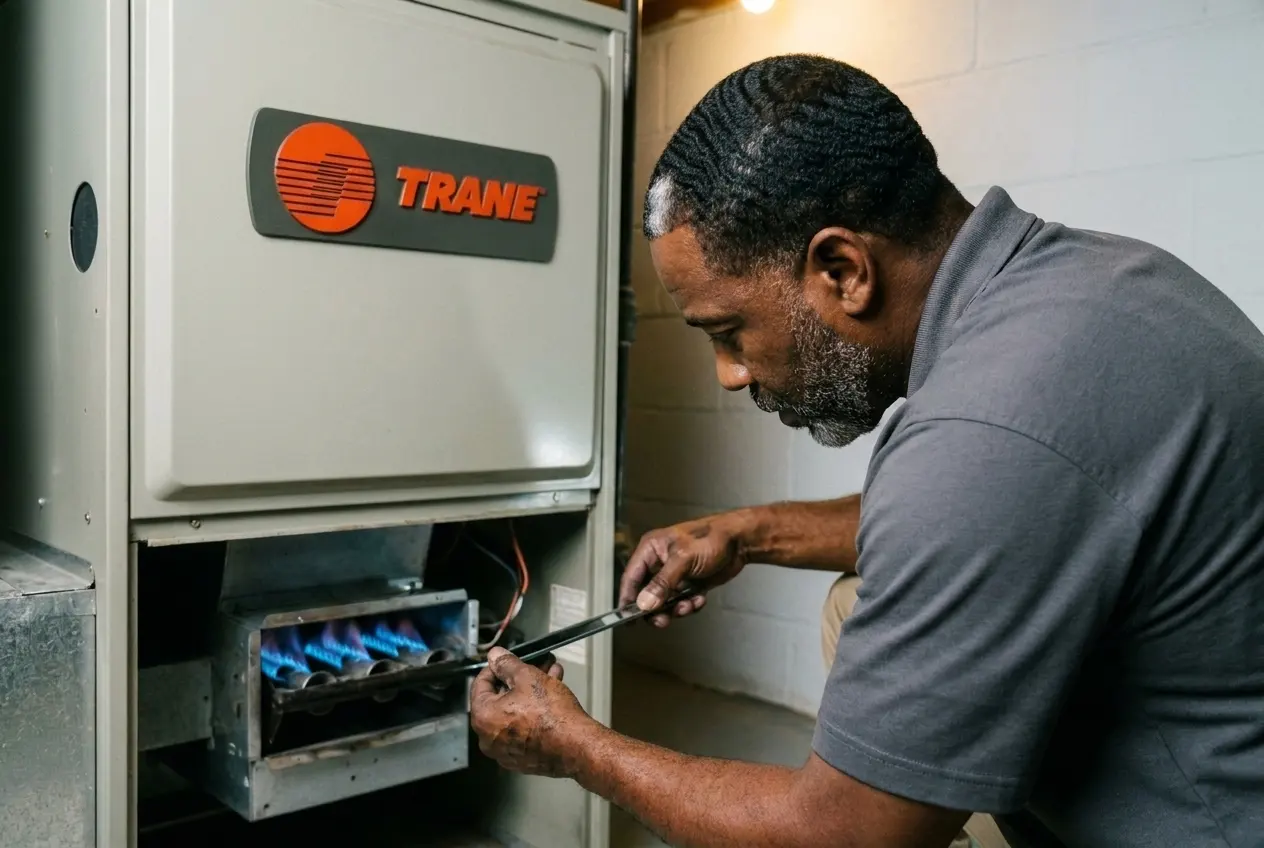
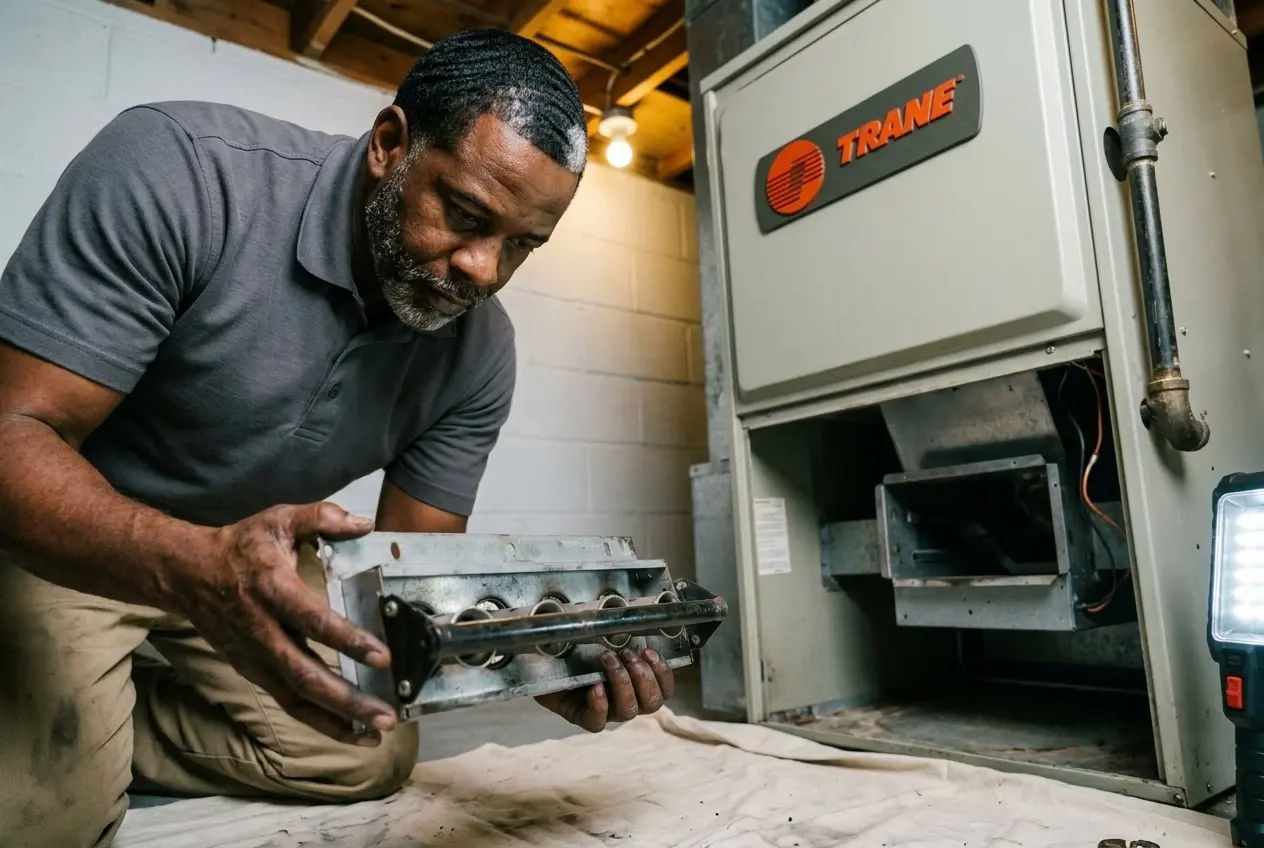
- Burners and combustion: Check burner condition, ignition, combustion performance, and proper venting.
- Igniter and flame sensor: Test for reliable ignition and flame detection, cleaning or replacing components when needed.
- Blower motor: Check operating condition, electrical draw, unusual noise, and airflow performance.
- Thermostat and controls: Confirm accurate temperature readings, proper cycling, and reliable electrical connections.
- Air filter and ductwork: Check for restrictions, leaks, and airflow problems that can strain the system.
The heat exchanger deserves particular attention because it separates combustion gases from the air circulated through the home. A qualified technician should investigate signs of damage rather than relying on the furnace's ability to produce heat as proof that it is safe. If repairs are needed, a professional furnace repair service in Atlanta can help determine the cause and explain the available options.
What warning signs should you watch for between tune-ups?
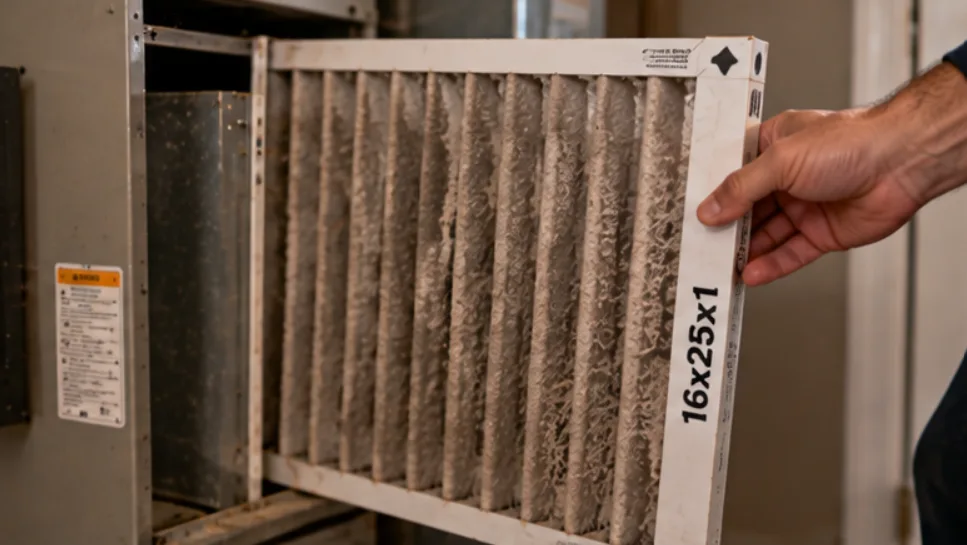
An aging furnace may continue operating while showing early signs of a developing problem. Changes in how the system starts, runs, or distributes heat are worth investigating, especially if they become more frequent as winter progresses. Do not assume that unusual behavior is simply normal because the equipment is old.
Watch for these warning signs:
- Repeated short cycling: The furnace starts and stops frequently without maintaining comfortable temperatures.
- Delayed ignition: The system struggles to start or repeatedly fails to establish a flame.
- Uneven heating: Some rooms remain cold while others reach the thermostat setting.
- New mechanical noises: Grinding, persistent rattling, or unusual banging may indicate a developing fault.
- Higher heating bills: Energy use rises without a clear explanation, such as colder weather or changed thermostat settings.
- Frequent repair calls: Multiple components fail within a short period.
Some symptoms have straightforward causes, such as a clogged filter, thermostat issue, or restricted return-air path. Others may indicate more serious mechanical or combustion problems. Check the filter and thermostat settings if it is safe to do so, but arrange professional diagnosis when symptoms persist rather than repeatedly resetting the system.
Why is combustion safety more important as a furnace ages?
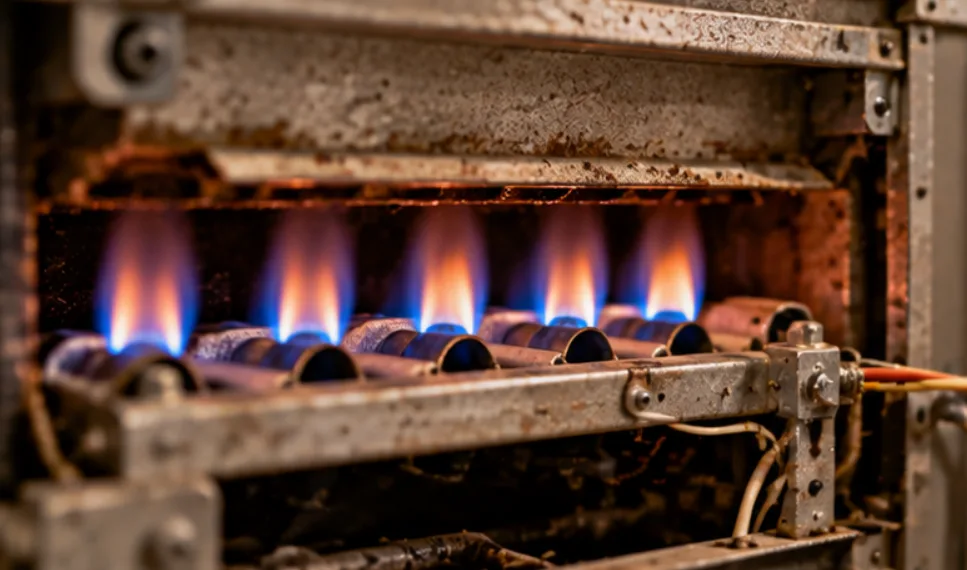
Gas furnaces burn fuel to generate heat, and the heat exchanger transfers that energy to the air moving through the home. The venting system must then carry combustion byproducts safely outdoors. As equipment ages, corrosion, damage, venting problems, or combustion irregularities can create safety concerns that cannot be ruled out simply because the furnace still produces warm air.
Carbon monoxide is especially important because it is colorless and odorless. Install working carbon monoxide alarms according to the manufacturer's instructions and applicable local requirements, and test them regularly. A carbon monoxide alarm is a backup safety measure, not a substitute for furnace inspection or proper venting.
If an alarm sounds or anyone experiences possible carbon monoxide symptoms such as headache, dizziness, nausea, or confusion, leave the home immediately and contact emergency services from a safe location. Do not restart a furnace when a serious combustion or venting problem is suspected. Have qualified professionals assess the situation before the equipment is used again.
How does Atlanta's climate affect older furnace performance?
Atlanta does not experience a long, consistently cold winter, but temperature swings can create a demanding pattern for heating equipment. A furnace may run lightly for several days, then operate for extended periods during a cold snap. Components that have weakened over time may fail when the system suddenly needs to deliver sustained heat.
Humidity and the condition of the home's air distribution system also matter. In older homes, leaky or poorly balanced ductwork can make rooms difficult to heat evenly. Restricted airflow can contribute to overheating, repeated shutdowns, or unnecessary strain on the blower. Before assuming the furnace itself is undersized or failing, a technician should evaluate the filter, return-air path, supply ducts, and thermostat placement.
A practical maintenance plan should account for the home's actual performance, not just the furnace's age. Keep the area around the equipment clear, replace filters according to the manufacturer's recommendations and household conditions, and note any rooms that consistently feel colder. These details help a technician investigate recurring comfort issues instead of treating each symptom as an isolated problem.
Should you repair or replace a furnace after 12 years?
The decision depends on the condition of the furnace, the cost of the proposed repair, its recent repair history, and the likely remaining service life. A 13-year-old furnace with a minor ignition problem may be worth repairing, particularly if the heat exchanger and other major components are in good condition. A furnace approaching 18 or 20 years old with repeated failures may be a stronger candidate for replacement.
Use the following factors to compare your options:
| Decision factor | Repair may make sense when… | Replacement deserves consideration when… |
|---|---|---|
| Repair cost | The repair is manageable relative to the system's condition | A major repair costs a substantial share of replacement |
| Repair history | The issue is isolated and uncommon | Multiple expensive faults keep returning |
| Safety | The furnace passes appropriate safety checks | A serious defect makes continued operation unsafe |
| Efficiency and comfort | The system heats reliably and bills remain reasonable | Comfort problems and operating costs persist |
| Parts and reliability | Suitable replacement parts are available | Parts are difficult to obtain and failures are increasing |
Do not base the decision on age alone or on a single rule that says a repair is never worthwhile after a certain number of years. Ask for a written estimate that identifies the failed component, repair cost, and any safety concerns. If a major defect is suspected, request an explanation of the evidence and the available options before making a long-term decision.
If replacement is appropriate, compare the complete installation cost, expected operating expenses, warranty terms, and equipment sizing. Homeowners considering a different heating setup can also review heat pump installation and replacement options. A heat pump provides both heating and cooling, but its suitability depends on the home's layout, ductwork, electrical capacity, and comfort requirements.
Why choose Indoor Experts Heating & Air Conditioning in Atlanta?
A furnace that has been operating for more than 12 years deserves careful attention before another heating season begins. Regular inspections can help identify worn components, address safety concerns, and determine whether continued repairs make sense for your home. Indoor Experts Heating & Air Conditioning helps Atlanta homeowners evaluate aging heating systems and understand their maintenance, repair, and replacement options.
If your furnace is still in good condition, professional furnace maintenance service can help keep it operating reliably. If recurring breakdowns, major repairs, or declining performance make replacement worth considering, explore furnace installation services to learn about your options. Call (404) 913-5802 or schedule an HVAC appointment to discuss the right next step for your Atlanta home.
Frequently asked questions
Is a furnace over 12 years old safe to use?
It can be, provided it is in good condition and passes appropriate safety checks. Age alone does not establish that a furnace is unsafe. Heat-exchanger damage, combustion problems, and improper venting require prompt professional evaluation.
Can regular maintenance extend a furnace's lifespan?
Maintenance can help by identifying worn components, airflow restrictions, and operating problems before they lead to more extensive damage. However, it cannot guarantee a particular lifespan or prevent every mechanical failure. Equipment condition and repair history still matter.
Should I replace a furnace as soon as it reaches 15 years?
Not necessarily. Some furnaces remain dependable beyond 15 years, while others develop expensive problems earlier. Compare the system's safety, repair needs, efficiency, and likely remaining service life before deciding.
Why does my older furnace turn on and off repeatedly?
Possible causes include restricted airflow, a dirty flame sensor, thermostat problems, overheating, or a control fault. A technician should diagnose the cause rather than assuming the furnace needs replacement.
Do I need a furnace inspection every year if I barely use it?
Annual professional maintenance is still generally recommended. Even intermittent use can leave developing issues undiscovered, and a system that sits idle may not reveal problems until it is needed during colder weather.