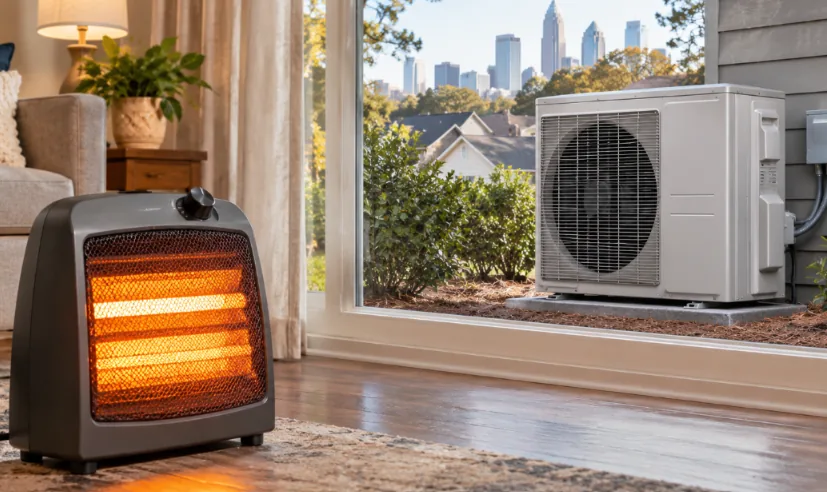

Your heat pump runs all winter, the electricity bill climbs, and you start wondering whether turning the thermostat down and running a space heater in whatever room you happen to be sitting in would cut the cost. It feels like it should, and that instinct is where a lot of money quietly leaks out. For most of the house, the space heater is the more expensive move, and this guide shows the arithmetic behind that so you can decide for your own rooms.
For whole-home heating, a central heat pump will generally use less electricity than electric resistance space heaters because a heat pump can move 2 to 3 units of heat for every unit of electricity while a space heater gives you about one. A single space heater can still cost less overall in one narrow case: when you lower the central thermostat and heat only one occupied room for a short stretch. Running two or three heaters at once can quickly erase that saving.
Space heater vs heat pump cost: the short answer
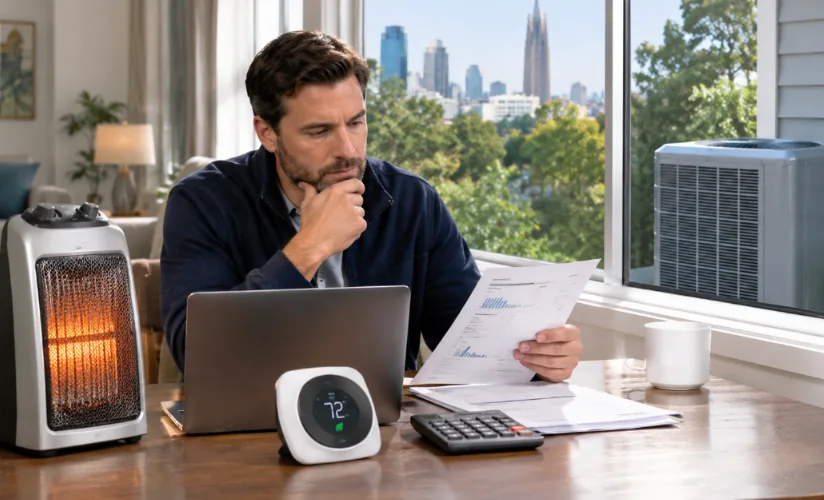
If you're heating your entire Atlanta home, your central heat pump will generally cost less to operate than several portable space heaters. A space heater converts electricity directly into heat, producing approximately one unit of heat for every unit of electricity consumed. A heat pump works differently by transferring heat from outdoor air indoors, often delivering two to three units of heat for each unit of electricity it uses in mild winter conditions.
The difference becomes clearer when you compare the cost of producing the same amount of heat. Here is an illustrative comparison using a residential electricity rate of $0.15 per kWh and a 1.5 kW heating output:
| Cost comparison | 1,500-watt space heater | Heat pump (COP 2–3) |
|---|---|---|
| Electricity used per hour | 1.5 kWh | 0.5–0.75 kWh |
| Estimated hourly cost | $0.23 | $0.08–$0.11 |
| Cost for 8 hours | $1.80 | $0.60–$0.90 |
| Cost for 30 days (8 hours daily) | $54 | $18–$27 |
These are illustrative estimates, not guaranteed Atlanta utility rates or actual equipment bills. The comparison assumes both systems deliver the same amount of heat. Actual heat pump efficiency, electricity rates, and operating conditions will affect the results.
A space heater can still be economical when you only need to warm one occupied room. For example, if you work in a home office all day, you might use a portable heater in that room while lowering the central thermostat slightly. Heating a smaller area instead of maintaining the same temperature throughout the house can reduce overall energy use, depending on the home's layout and insulation.
Atlanta's relatively mild winter climate generally favors heat pump efficiency. During colder periods, the system may need to work harder, and some models use auxiliary electric resistance heat when additional heating capacity is required. That can increase electricity consumption, but it does not automatically make portable space heaters the cheaper option.
The bottom line: Use your central heat pump for consistent whole-house heating. Consider a space heater for occasional, targeted warmth in one room, rather than using several portable heaters as a replacement for your central heating system.
How much electricity does a space heater actually use?
A standard portable space heater on its high setting draws about 1,500 watts, which is 1.5 kilowatts whenever it is running. Electric resistance heaters convert nearly all of the electricity they use into heat at the point of use, so the biggest cost variables are wattage and run time.
Turning watts into a bill is simple. A 1,500-watt heater running 8 hours uses about 12 kilowatt-hours per day. Run it longer, or on high the whole time, and that climbs proportionally. There is no way to beat the 100 percent ceiling, so the only levers you have are run time and how small a space you are heating.
To get dollars, multiply those kilowatt-hours by your Georgia residential electricity rate per kWh, which you will find on your power bill. That rate is what decides whether 12 kWh a day feels trivial or painful. It also sets the baseline the heat pump has to beat, and the next section shows why the central system clears it easily.
Why does a heat pump deliver more heat per dollar than a space heater?
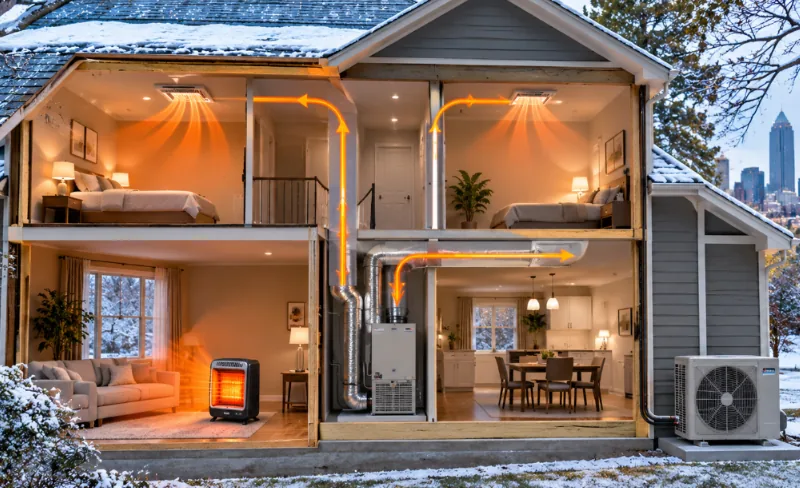
The biggest difference between a heat pump and a portable space heater is how each produces warmth. A space heater converts electricity directly into heat, while a heat pump transfers existing heat from outdoor air into your home. This allows a heat pump to deliver more heating output from the same amount of electricity.
Understanding coefficient of performance (COP)
Coefficient of performance, or COP, measures how much heat a system delivers compared with the electricity it consumes. A COP of 3 means the heat pump produces three units of heat for every unit of electricity used. A resistance space heater has a COP of approximately 1, making heat pumps more efficient under suitable operating conditions.
Comparing seasonal efficiency with HSPF2
HSPF2 stands for Heating Seasonal Performance Factor 2. It measures a heat pump's heating efficiency across a range of outdoor temperatures over a heating season. A higher HSPF2 rating indicates greater seasonal heating efficiency. Atlanta homeowners can use this rating to compare heat pump models when considering a replacement or new installation.
How heat pumps deliver more than 100% efficiency
A heat pump can deliver more heat energy than the electrical energy it consumes because it moves heat rather than generating all of it through electrical resistance. For example, a system operating at a COP of 3 can deliver three units of heat using one unit of electricity, depending on outdoor conditions and equipment performance.
When auxiliary heat increases electricity consumption
During colder weather, a heat pump may need additional heating capacity to maintain your thermostat setting. Many systems automatically activate auxiliary electric resistance heat when necessary. This backup operates at a COP near 1, similar to a portable space heater, so electricity consumption can increase when it runs for extended periods.
Maintaining heat pump efficiency throughout winter
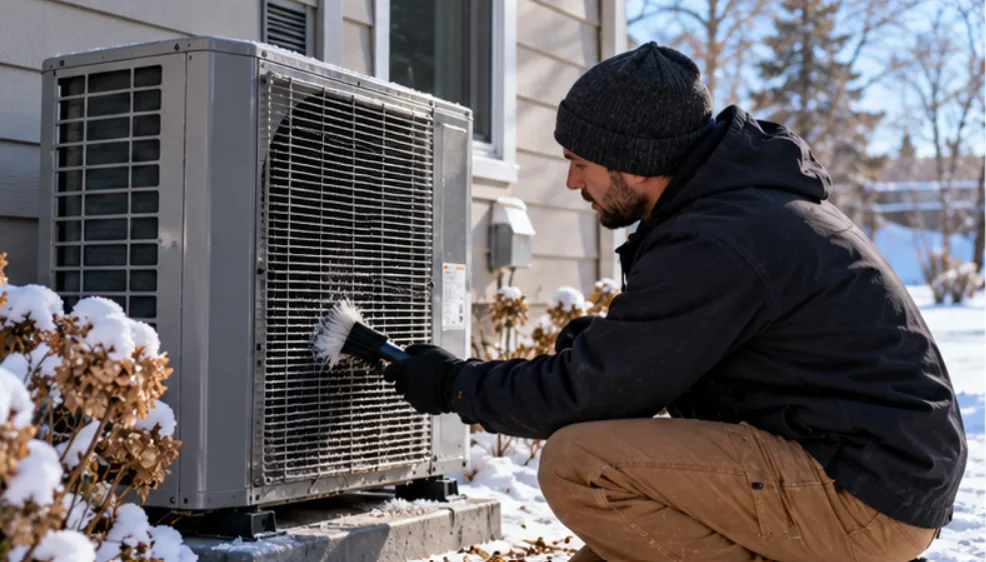
Dirty filters, restricted airflow, dirty coils, and refrigerant problems can reduce a heat pump's performance. Regular inspections help identify these issues before they affect heating efficiency. Scheduling heat pump maintenance in Atlanta and checking your system before winter can help maintain reliable operation.
The cost difference ultimately depends on how much heat your home needs and how efficiently your equipment delivers it. A properly maintained heat pump can provide whole-house comfort with less electricity than resistance heating, while a portable heater may still be useful for occasional warmth in one occupied room.
When does running a space heater actually make sense?
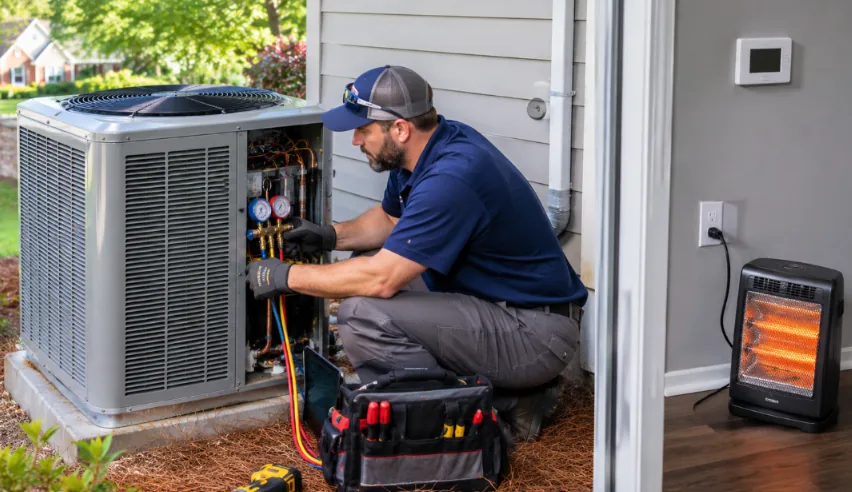
A portable space heater can reduce heating costs when you spend several hours in one room and do not need the rest of the house at the same temperature. For example, you might lower the central thermostat while working in a home office and use a small heater to keep that room comfortable.
The savings disappear when you start heating multiple rooms with portable heaters. Each resistance heater consumes electricity directly to produce heat, so running two or three units for several hours can use more electricity than allowing your central heat pump to maintain a comfortable temperature.
Before relying on a space heater to solve a cold-room problem, check whether something is preventing warm air from reaching that area:
- Leaky or damaged ductwork: Disconnected, crushed, or poorly sealed ducts can reduce airflow to distant rooms.
- Insufficient insulation: Attics, exterior walls, and poorly insulated rooms can lose heat quickly.
- Blocked supply vents: Furniture, rugs, and curtains can restrict warm air from entering a room.
- Poor return airflow: A room without an adequate return-air pathway may struggle to maintain even temperatures.
- Heat pump performance problems: Dirty filters, airflow restrictions, or mechanical issues can reduce heating output.
If one bedroom or living area stays cold while the rest of your Atlanta home feels comfortable, adding a space heater may only cover up the underlying problem. An inspection of the heat pump and heating system can help identify whether the issue comes from equipment performance or air distribution.
How do thermostat settings, insulation, and room size change the cost?
Your thermostat setting affects how much electricity your central heat pump consumes. Lowering the temperature when you are using only one room can reduce whole-house heating demand. However, the savings depend on how long the setback lasts and how much heat the occupied room needs to remain comfortable. Avoid large temperature setbacks if your system brings on electric auxiliary heat during recovery, because that can reduce the expected savings.
Room size and insulation also influence the comparison. A small, well-insulated home office may stay comfortable with a portable heater operating for a limited period. A large room with drafty windows, poor insulation, or high ceilings may require much longer heater operation, increasing electricity consumption.
Here is how different household situations affect the choice:
| Your situation | More practical option | Reason |
|---|---|---|
| Heating the entire house | Central heat pump | Transfers heat more efficiently than resistance heating |
| Working in one room for several hours | Space heater may be economical | Avoids heating unoccupied areas |
| Heating multiple bedrooms | Central heat pump | Multiple portable heaters can consume substantial electricity |
| Using a heater briefly in a small room | Space heater may be suitable | Provides targeted warmth when needed |
| Dealing with a large, poorly insulated room | Investigate the heat pump and insulation | Heat loss can increase the operating cost of either option |
The important distinction is whether you are replacing whole-house heating or simply adding warmth to one room. If everyone in your household needs comfortable temperatures in different rooms, your central heat pump will generally be the more economical choice.
Making the cheaper choice for your Atlanta home
For most Atlanta homeowners, the central heat pump is the more economical option for maintaining whole-house comfort. Its ability to transfer heat instead of generating it through electrical resistance gives it an efficiency advantage during much of Atlanta's relatively mild winter weather.
A space heater can make financial sense when you occupy one room, lower the central thermostat, and use the portable heater for a limited period. Before choosing that approach, consider three things: how many rooms need heating, how long the heater will operate, and how well your home retains warmth.
Check the wattage printed on your space heater and multiply its kilowatt rating by the hours of operation and your electricity rate. Also pay attention to how frequently your heat pump uses auxiliary heat. If backup heating runs regularly during mild Atlanta weather, have the system inspected rather than assuming portable heaters will solve the problem.
Why choose Indoor Experts Heating & Air Conditioning in Atlanta?
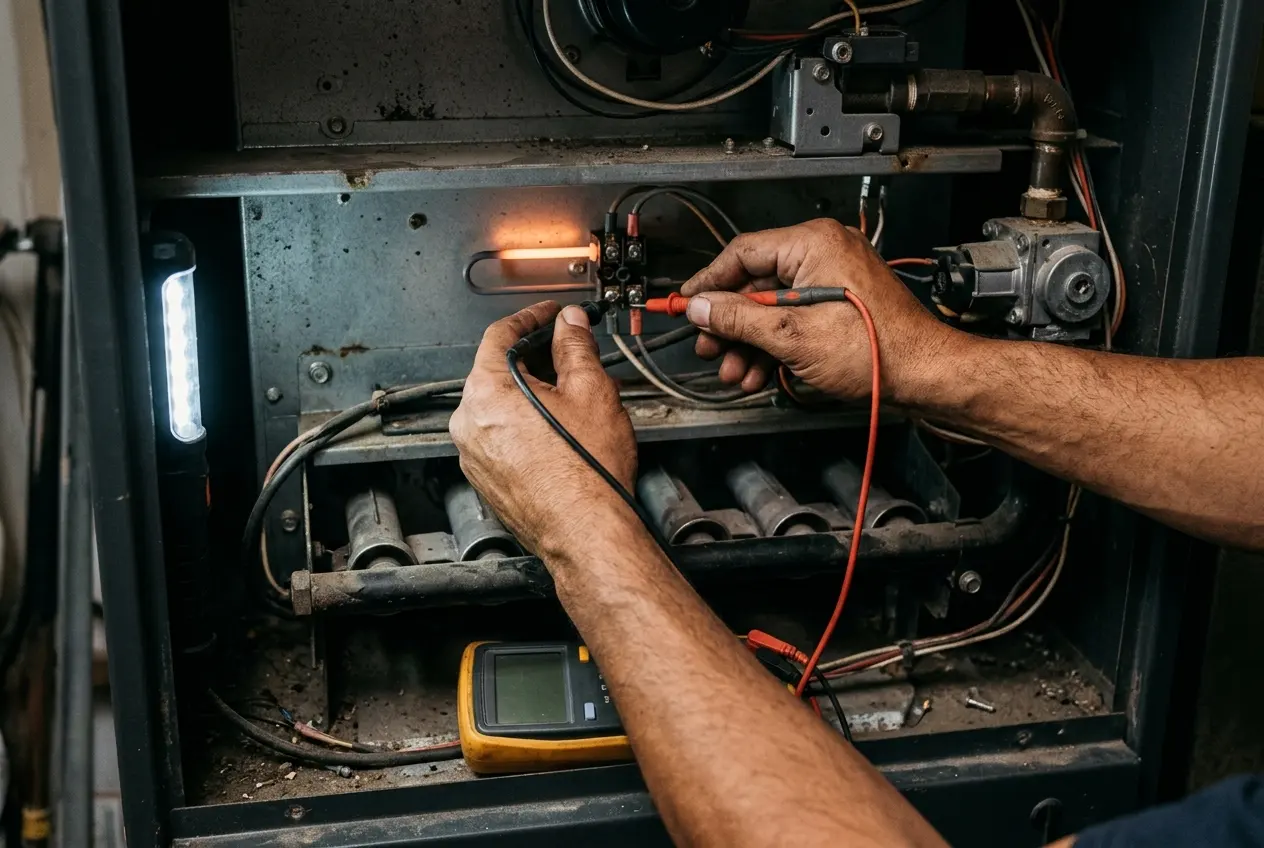
At Indoor Experts Heating & Air Conditioning, we help Atlanta homeowners identify why their heating systems consume more electricity than expected. If your heat pump struggles to warm certain rooms, runs continuously without maintaining the thermostat setting, or frequently activates auxiliary heat, our technicians can inspect the equipment and identify potential performance problems.
We provide heating services in Atlanta, including heat pump troubleshooting, repairs, and maintenance. If restricted airflow or a mechanical issue is affecting your heating performance, we can explain the available repair options and help you understand whether your system needs attention before you rely on portable heaters throughout winter.
Before spending more money on additional space heaters, find out whether your existing HVAC system is operating properly. Call Indoor Experts Heating & Air Conditioning at (404) 913-5802 or schedule an appointment online to arrange service.
Frequently asked questions
How much does it cost to run a 1,500-watt space heater for eight hours?
A 1,500-watt space heater consumes 1.5 kWh of electricity per hour. Over eight hours, that equals 12 kWh. At an electricity rate of $0.15 per kWh, the estimated cost is $1.80. Your actual expense depends on your electricity plan and how long the heater operates.
Will turning down my heat pump and using a space heater lower my electricity bill?
It can, provided you heat one occupied room while allowing the rest of the house to remain cooler. The savings come from reducing whole-house heating demand, not from the portable heater being more efficient. If several rooms need warmth, the central heat pump will generally cost less to operate.
Is it safe to leave a space heater running overnight?
Turn a portable space heater off before sleeping or leaving it unattended. Keep it at least three feet from curtains, bedding, furniture, and other combustible materials, and plug it directly into a wall outlet rather than an extension cord or power strip. Follow the manufacturer's instructions and use a stable location where the heater cannot easily tip over.
Why is my heat pump running auxiliary heat?
Auxiliary heat uses electric resistance heating to help your heat pump maintain indoor temperatures when additional capacity is needed. It may activate during cold weather or recovery from a large thermostat adjustment. Occasional operation can be normal, but frequent use during mild Atlanta weather deserves a professional inspection.
Does a heat pump become less efficient during cold weather?
Air-source heat-pump efficiency and heating capacity generally change as outdoor temperatures fall, although cold-weather performance varies significantly by model. Some systems activate electric resistance backup when needed. However, Atlanta's relatively mild winters allow many heat pumps to operate efficiently through much of the heating season.