Skip to content
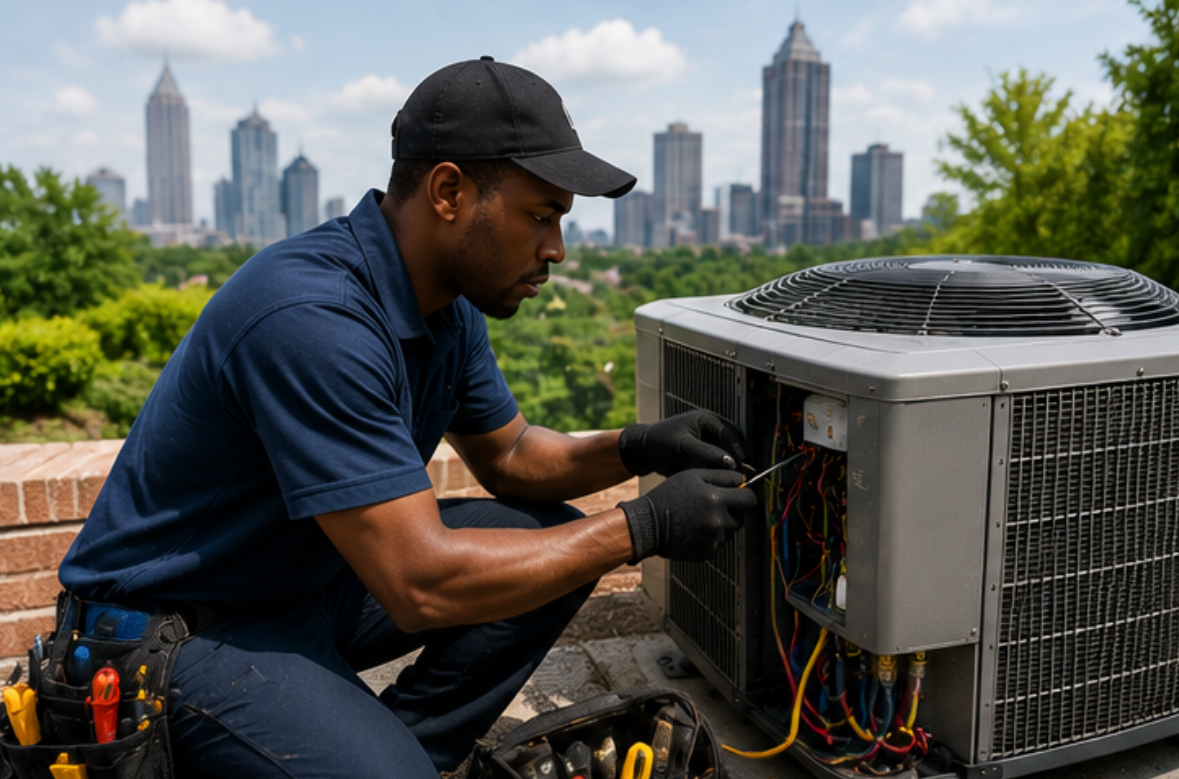
When your air conditioner quits during an Atlanta summer, cost is usually the first question that comes to mind. Unfortunately, it is also one of the hardest questions to answer without understanding what is actually wrong with the system. Two homeowners can both schedule an AC repair visit and receive very different estimates because repair costs are influenced by much more than the age of the unit.
The good news is that most repair pricing follows predictable patterns. Factors like the failed component, system type, accessibility, and overall condition of the equipment typically determine where a repair falls on the cost spectrum. Understanding those factors helps Atlanta homeowners make informed decisions when facing an unexpected breakdown.
Why Do AC Repair Costs Vary So Much in Atlanta?

Many homeowners expect AC repair pricing to work like replacing a household appliance part, but HVAC systems are far more complex. A technician is not simply replacing a component. They are diagnosing electrical systems, airflow issues, refrigerant performance, control boards, safety devices, and mechanical components that all work together.
Atlanta’s climate also plays a role. Air conditioners often operate from late spring through early fall, with long periods of high humidity and temperatures regularly reaching the upper 80s and 90s. That extended runtime places significant stress on compressors, capacitors, motors, contactors, and evaporator coils.
Several Variables Influence Repair Costs
| Cost Factor | Why It Matters |
|---|---|
| Type of failed component | Some parts cost significantly more than others |
| Age of equipment | Older systems may require harder-to-source parts |
| System size | Larger systems often use larger components |
| Accessibility | Attic and crawlspace repairs require more labor |
| Refrigerant type | Older refrigerants can increase repair costs |
| Severity of damage | Secondary damage often increases repair scope |
Because every repair starts with diagnosis, accurate troubleshooting often has a greater impact on total cost than the replacement part itself.
What Does AC Repair Typically Cost in Atlanta?
While every repair is different, most Atlanta homeowners can expect AC repair costs to fall somewhere between a relatively minor service call and a major component replacement. The final price depends on what failed, how difficult the repair is to access, whether refrigerant work is involved, and the age of the system.
Atlanta’s long cooling season often means equipment accumulates thousands of operating hours each year. As a result, technicians commonly see everything from simple capacitor replacements to larger repairs involving coils, compressors, and blower motors.
Typical AC Repair Cost Ranges
| Repair Type | Typical Cost Range |
|---|---|
| Capacitor replacement | $150–$400 |
| Contactor replacement | $150–$450 |
| Condensate drain cleaning | $150–$350 |
| Thermostat replacement | $200–$700 |
| Blower motor repair or replacement | $400–$1,500 |
| Refrigerant leak repair | $300–$2,000+ |
| Evaporator coil replacement | $1,500–$4,000+ |
| Compressor replacement | $2,000–$5,000+ |
These numbers are intended as general planning ranges rather than exact quotes. Factors such as equipment brand, refrigerant type, system accessibility, warranty coverage, and the extent of damage can significantly affect the final cost.
For example, replacing a capacitor on a five-year-old system may be a straightforward repair completed in a single visit. A refrigerant leak inside an older evaporator coil often requires extensive diagnosis, refrigerant recovery, leak repair, and system recharging, which can increase costs substantially.
Understanding common repair costs is helpful, but most breakdowns start with warning signs long before homeowners ever receive an estimate. Knowing what those signs look like can help you address problems earlier, when repairs are often less expensive.
What Are the Most Common AC Repairs in Atlanta Homes?

Most air conditioners do not fail without warning. Long before a complete breakdown, the system usually starts showing small signs that something is wrong. Atlanta’s combination of high humidity, long cooling seasons, heavy pollen, and frequent summer thunderstorms creates predictable wear patterns that HVAC technicians see every year.
Recognizing these warning signs early often turns a major repair into a much smaller service call. Here are some of the issues homeowners commonly notice before a repair becomes necessary.
Weak Airflow From the Vents
If certain rooms suddenly feel warmer than others or airflow seems weaker than normal, the problem may involve a failing blower motor, a clogged evaporator coil, a dirty filter, or duct restrictions. Weak airflow forces the system to run longer, increasing both energy costs and equipment strain.
Warm Air During Hot Weather
When the thermostat is set correctly but the vents are blowing air that feels lukewarm, the issue often points to refrigerant problems, frozen coils, compressor issues, or airflow restrictions. During Atlanta’s 90-degree summer afternoons, this symptom usually becomes noticeable very quickly.
Water Around the Indoor Unit
Atlanta’s humidity means your air conditioner removes a significant amount of moisture every day. When condensate drains become clogged, homeowners may notice water around the air handler, damp insulation, or even ceiling stains near attic installations. Left untreated, a simple drainage issue can lead to water damage and mold concerns.
Frequent On-and-Off Cycling
An AC system that constantly starts and stops without completing normal cooling cycles often signals thermostat problems, electrical component wear, airflow issues, or incorrect system sizing. Short cycling places additional stress on capacitors, contactors, and compressors while driving up utility bills.
Unusual Noises From the System
Buzzing, clicking, rattling, or humming noises are rarely normal. Electrical issues, loose components, failing motors, worn bearings, and airflow restrictions often reveal themselves through sound before they cause a complete system failure. New noises are usually worth investigating before the problem spreads to more expensive components.
Many of these repairs remain relatively affordable when addressed early. The longer a system operates with restricted airflow, electrical problems, drainage issues, or refrigerant concerns, the greater the chance of secondary damage that increases the overall repair cost.
Which AC Repairs Tend to Cost the Most?
The repairs homeowners worry about most usually involve major system components. These failures are less common than capacitor or contactor replacements, but they can have a significant impact on both repair costs and future equipment decisions.
Large repairs often become more complicated because the failed component may have damaged other parts of the system. For example, a refrigerant leak can create compressor stress, while airflow problems can eventually damage blower motors or evaporator coils.
Higher-Cost Repairs Often Involve
| Major Component | Why Costs Increase |
|---|---|
| Compressor | Labor-intensive replacement and system recovery |
| Evaporator coil | Refrigerant handling and extensive disassembly |
| Condenser coil | Large component with significant labor |
| Variable-speed blower motor | Advanced electronics and motor assemblies |
| Refrigerant leaks | Diagnosis, repair, and system recharge |
| Control boards | Complex diagnostics and replacement |
When repairs begin approaching a significant percentage of replacement cost, many homeowners start comparing repair expenses against the benefits of a complete air conditioning installation or system upgrade.
What Can Homeowners Do to Keep Repair Costs Under Control?

While no air conditioner lasts forever, many of the most expensive repairs develop from smaller issues that were ignored for months. A system rarely goes from working perfectly to needing a compressor overnight. More often, warning signs appear first: longer run times, weak airflow, rising utility bills, unusual noises, or humidity problems that gradually worsen.
Atlanta’s combination of heat, humidity, pollen, and long cooling seasons makes preventative maintenance especially valuable. A clogged condensate drain during July humidity or a dirty evaporator coil after a heavy pollen season can create problems that spread well beyond the original issue.
Small Problems That Often Become Expensive Repairs
| Early Warning Sign | Potential Long-Term Consequence |
|---|---|
| Weak airflow | Frozen coils and blower strain |
| Dirty outdoor coil | Compressor overheating |
| Frequent cycling | Electrical component wear |
| Water around air handler | Drainage and water damage issues |
| Warm air from vents | Refrigerant or airflow problems |
| Ignored maintenance | Reduced efficiency and higher repair costs |
Routine air conditioning maintenance often catches these issues before they turn into larger repairs, helping homeowners avoid emergency breakdowns during Atlanta’s hottest months.
When Does It Make More Sense to Replace Instead of Repair?
One of the most common questions homeowners ask after receiving a repair estimate is whether the repair is actually worth doing. There is no universal number that automatically triggers replacement, but technicians often look at the age of the system, the repair history, and the overall condition of the equipment before making a recommendation.
For example, replacing a capacitor on a twelve-year-old system may still make perfect sense. Replacing a compressor on a fifteen-year-old unit with declining efficiency and multiple previous repairs is often a different conversation entirely. The goal is not simply restoring cooling today. It is determining which option provides the best value over the next five to ten years.
Factors That Often Shift the Decision Toward Replacement
- The system is 12 to 15 years old or older
- Major components such as the compressor or coil have failed
- Repair costs continue increasing year after year
- Utility bills have risen significantly
- Certain rooms remain uncomfortable despite repairs
- Refrigerant leaks are becoming recurring issues
In these situations, homeowners often compare the cost of another repair against the benefits of a modern air conditioning installation, improved efficiency, stronger humidity control, and lower long-term maintenance costs.
Why Choose Indoor Experts for AC Repair in Atlanta?
When it comes to AC repair, the cheapest estimate is not always the lowest cost. Accurate diagnosis is what ultimately saves homeowners money. Replacing the wrong part, overlooking airflow issues, or missing a refrigerant problem can lead to repeat service calls and higher repair costs down the road.
With 10+ years of HVAC experience, Indoor Experts helps Atlanta homeowners understand not only what failed, but also what is driving the repair cost and whether fixing the system makes financial sense. We evaluate airflow, electrical components, refrigerant performance, equipment condition, and overall system efficiency before recommending repairs.
If your AC is blowing warm air, running constantly, or facing an expensive repair, our team can help you compare your options. Whether you need professional AC repair, routine air conditioning maintenance, or guidance on an AC replacement, we provide honest recommendations, transparent pricing, and solutions designed for long-term value.