If you've been comparing HVAC systems, you've probably heard that Trane and American Standard are exactly the same. With similar-looking equipment, comparable efficiency ratings, and closely matched specifications, it's easy to see why homeowners assume there is little difference between them.
The reality is a little more nuanced. While Trane and American Standard share the same parent company, engineering platforms, and many internal components, there are still differences in branding, dealer networks, product naming, and the homeowner experience after installation. Understanding where the two brands are identical and where they differ can help you make a more informed investment.
For Atlanta homeowners, choosing between Trane and American Standard isn't simply about the equipment badge. Installation quality, system sizing, airflow, and contractor expertise also play a major role in comfort and efficiency.
This guide compares both brands to help you determine which one fits your home best.
Are Trane and American Standard really the same company?
One of the biggest reasons these brands are compared so often is because they're closely related. Both Trane and American Standard Heating & Air Conditioning are owned by Trane Technologies, one of the world's largest climate solution manufacturers. Rather than competing as completely independent companies, the two brands are developed using many of the same engineering standards, manufacturing facilities, and product platforms.
Because of this shared ownership, many residential air conditioners, heat pumps, and furnaces from both brands use similar internal components, compressors, coils, blower motors, and refrigeration technology. In many cases, the equipment rolling off the production line is mechanically very similar, with differences primarily found in branding, product names, dealer distribution, and available model options.
| Shared Feature | Trane & American Standard |
|---|---|
| Parent company | Trane Technologies |
| Manufacturing standards | Shared engineering platforms |
| Compressor technology | Similar premium compressor designs |
| Refrigerant | Modern R-454B and current refrigerant platforms as applicable |
| Expected lifespan | Approximately 15–20 years with professional installation and maintenance |
While the equipment shares a common engineering foundation, homeowners should avoid assuming every model is identical. Different product tiers, dealer offerings, available accessories, and installation practices can still influence long-term performance.
How similar are Trane and American Standard systems?
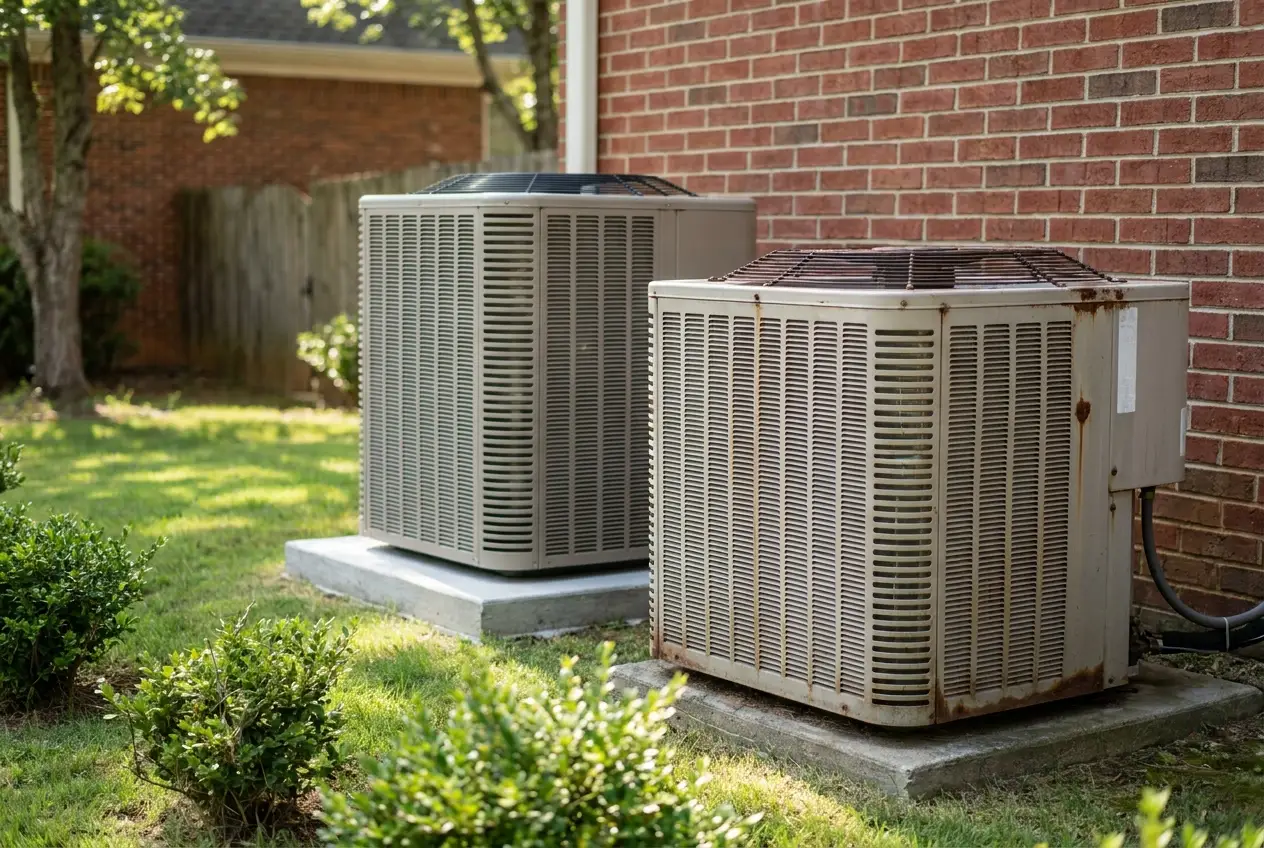
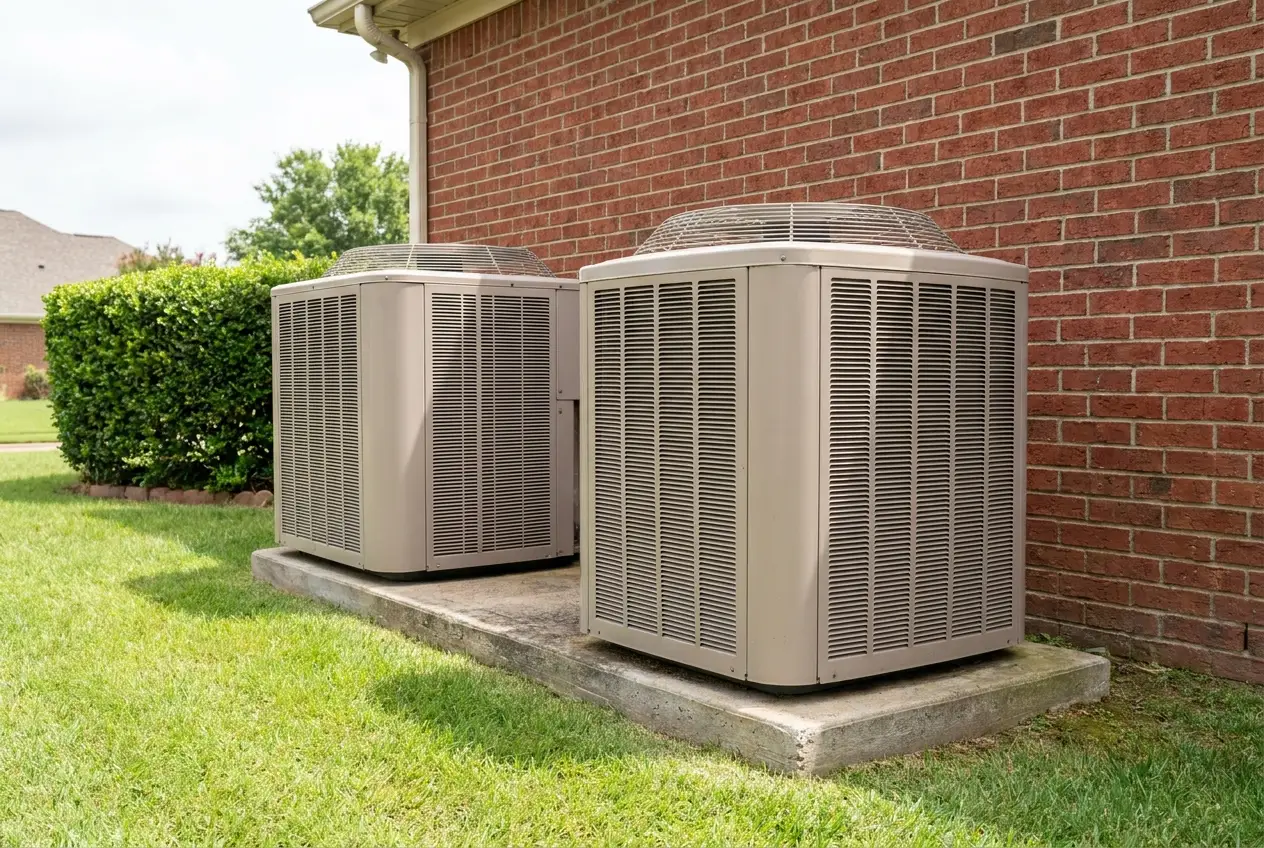
From an engineering perspective, Trane and American Standard are among the closest HVAC brands on the residential market. Comparable systems often use the same cabinet dimensions, heat exchangers, evaporator coils, fan assemblies, compressors, and inverter technology. In many cases, the largest visible difference is the logo on the cabinet and the product name listed on the specification sheet.
For example, a Trane XR16 and an American Standard Silver 16 are designed to deliver very similar efficiency and cooling performance when installed with properly matched indoor equipment. Likewise, premium systems such as the Trane XV18 and American Standard Platinum 18 both feature variable-speed technology designed to improve humidity control, reduce temperature fluctuations, and increase seasonal energy efficiency.
Components that are often shared
- Compressor platforms: Similar engineering across comparable product tiers.
- All-aluminum coil technology: Designed for durability and efficient heat transfer.
- Variable-speed inverter technology: Available on premium comfort systems from both brands.
- Communicating controls: Smart thermostat compatibility on higher-end models.
- Warranty structure: Comparable manufacturer warranty coverage when registration requirements are met.
Although the internal engineering is remarkably similar, overall system performance still depends on selecting an AHRI-matched system, completing a proper Manual J load calculation, and following manufacturer commissioning procedures during installation.
How do comparable Trane and American Standard models compare?
Because both brands share many engineering platforms, comparing equivalent models provides a much more meaningful evaluation than comparing the brands as a whole. Most homeowners shopping for a new HVAC system are choosing between similar efficiency levels rather than completely different product categories.
| Trane Model | Comparable American Standard Model | Typical Installed Price (Atlanta) | b |
|---|---|---|---|
| XR14 | Silver 14 | $7,500–$10,000 | Budget-conscious replacements |
| XR16 | Silver 16 | $9,000–$12,500 | Improved efficiency and quieter operation |
| XV18 | Platinum 18 | $13,000–$17,500 | Premium comfort and humidity control |
| XV20i | Platinum 20 | $15,000–$20,000+ | Luxury homes with maximum comfort expectations |
Installed pricing represents typical complete HVAC replacements in the Atlanta area and may vary depending on equipment capacity, ductwork modifications, electrical upgrades, permits, and installation complexity.
Looking beyond price is equally important. Homeowners should compare features such as variable-speed compressors, communicating thermostats, humidity control capabilities, warranty coverage, sound ratings, and long-term service support before deciding between comparable models. Even when two systems share similar specifications, the quality of the air conditioning installation will ultimately determine how efficiently and reliably they perform over the next 15 to 20 years.
Are there any meaningful differences between Trane and American Standard?
Although the equipment shares much of the same engineering, homeowners may notice differences when comparing installation proposals. These differences usually relate to the contractor, available product options, dealer support, and the overall buying experience rather than major changes inside the equipment itself.
Dealer network
Trane and American Standard are sold through separate authorized dealer networks. Training requirements, installation standards, warranty support, and customer experience often vary from one contractor to another. Choosing an experienced dealer with a proven installation process generally has a greater impact on system performance than choosing between the two brands.
Product naming
One reason homeowners think the brands are different is because the model names aren't the same. For example, the Trane XR16 closely aligns with the American Standard Silver 16, while the Trane XV18 shares many similarities with the American Standard Platinum 18. Comparing model specifications rather than product names provides a much more accurate evaluation.
Comfort features
Premium systems from both brands offer variable-speed compressors, communicating thermostats, and advanced humidity control. However, available accessories, thermostat packages, zoning controls, and indoor air quality products may vary depending on the dealer and the equipment package being quoted.
Installation experience
The installation process often creates the biggest difference homeowners experience. Proper Manual J load calculations, ductwork evaluation, airflow balancing, refrigerant charging, and startup commissioning determine whether either system achieves its published efficiency and comfort performance. A professional air conditioning installation is far more important than the logo on the outdoor unit.
Which brand offers better long-term value?
When homeowners compare Trane and American Standard, they're often thinking beyond the purchase price. They want to know which system is likely to deliver the best value over the next 15 to 20 years.
Since both brands share many internal components and engineering standards, long-term ownership costs are usually very similar. Instead, the biggest factors influencing value are installation quality, preventive maintenance, repair history, and how efficiently the equipment operates throughout Atlanta's long cooling season.
| Ownership Factor | Trane | American Standard |
|---|---|---|
| Expected lifespan | 15–20 years | 15–20 years |
| Annual maintenance | Similar | Similar |
| Parts availability | Excellent | Excellent |
| Warranty coverage | Comparable with registration | Comparable with registration |
| Energy efficiency | Comparable across equivalent models | Comparable across equivalent models |
Homeowners planning to stay in their property for many years should focus less on which logo appears on the cabinet and more on choosing equipment that's properly sized, professionally installed, and maintained through annual AC maintenance.
How should you choose between Trane and American Standard?
If equivalent models share similar engineering, how do you decide?
Instead of asking which brand is "better," ask which proposal provides the greater overall value. Comparing complete HVAC systems rather than equipment alone often leads to a better decision.
Consider these factors before signing a proposal:
- System sizing: Was an ACCA Manual J load calculation completed before recommending equipment?
- AHRI certification: Are the outdoor unit, evaporator coil, and air handler an AHRI-matched combination?
- Installation process: Will the contractor verify airflow, static pressure, refrigerant charge, superheat, and subcooling during commissioning?
- Warranty support: Who registers the equipment, and what labor warranty is included?
- Future service: Does the contractor provide ongoing air conditioning maintenance and repair support after installation?
When these questions are answered properly, homeowners can compare proposals based on installation quality instead of marketing claims.
Why many homeowners choose Trane
Because Trane and American Standard share much of the same engineering, homeowners often base their decision on the contractor installing the equipment. Even so, Trane continues to stand out for its strong brand recognition, premium product lineup, and reputation for durability developed over decades of residential HVAC innovation.
Many Atlanta homeowners also appreciate Trane's premium comfort features, including Climatuff® compressors, Spine Fin™ coil technology, advanced ComfortLink™ communicating controls, and variable-speed systems such as the XV18 and XV20i, which are designed to improve humidity control while maintaining consistent indoor temperatures during Georgia's long cooling season.
For homeowners investing in a premium HVAC replacement, these features can provide added confidence that the system is designed for dependable long-term performance when professionally installed.
Why choose Indoor Experts for your Trane installation in Atlanta?
Although Trane and American Standard share many similarities, the quality of the installation ultimately determines how well either system performs. As a Trane Comfort Specialist serving Atlanta since 2014, Indoor Experts follows manufacturer-recommended installation procedures to help homeowners get the full benefit of their HVAC investment.
Whether you're planning a new air conditioning installation, comparing premium Trane systems, or exploring flexible financing options, our team takes the time to properly size your equipment, evaluate your home's airflow, and commission every system according to Trane's specifications. Contact Indoor Experts today to schedule a consultation and find the Trane solution that's designed for your home's comfort, efficiency, and long-term reliability.